Why Development Matters
Something is happening in our communities that deserves more honest attention than it’s getting.
If you spend time around young people, really spend time, not just read reports, you can feel it. There is more anxiety, hesitation, and avoidance. We are seeing more kids who, at some level, don’t believe they can handle what’s in front of them.
At the same time, there has never been more focus on mental health.
Schools are talking about it. Police departments are running mental health awareness fairs with face painting and hot dogs. Schools and entire districts are funding it. There are frameworks built around identifying distress earlier and responding faster. Awareness campaigns are everywhere. Screenings are more common, referrals are up, and services have expanded.
On the surface, that sounds like progress, but it raises difficult questions that don’t get asked nearly enough: If we are doing more than ever before, why does it feel like kids are becoming less able to handle life, not more?
That question isn’t comfortable, but it matters.
Good Intentions, Real Constraints
Most educators, counselors, and administrators are not the problem. They are working inside a system that is trying to respond to real need. They see kids struggling and they want to help. That part is genuine, but good intentions don’t determine outcomes. Systems do. Systems are shaped by what they measure, what they reward, and what they are held accountable for.
Right now, most systems are structured to identify problems, document them, and connect students to services. Those are the metrics that exist. Those are the actions that are funded. Those are the outcomes that can be reported.
There is far less structure and far less accountability around building resilience, developing discipline, or increasing a young person’s ability to handle stress, pressure, and uncertainty. That kind of development is harder to quantify, and it takes longer. It doesn’t fit neatly into a reporting system. In environments that are increasingly risk-averse, it can even feel uncomfortable or intimidating.
So the system does what systems naturally do. It leans toward what is measurable, fundable, and defensible. Over time, that means more identification, more services, and more intervention, but not necessarily more strength and resilience being developed.
When Awareness Changes the Way Kids See Themselves
There is another layer to this, and it is not subtle. Awareness, when done well, can be helpful. It can reduce stigma and help people recognize when they need support. But when awareness becomes constant, and when it is not paired with tools for action, it can start to shift how kids interpret their own internal experience.
Normal stress begins to feel like something is wrong, and temporary emotions begin to feel permanent. Discomfort begins to feel like a signal to stop rather than something to move through. Identity starts to form around limitation instead of capability and the capacity to handle hard things.
These systems can unintentionally make kids weaker because they are being taught to look inward for problems more than they are being trained to move forward through difficulty and see challenges as something to overcome.
The Gap No One Is Closing
As we diagnose more, we are developing less.
We have built systems to respond when something goes wrong. Why are we not building systems that intentionally make young people stronger before things go wrong?
Because development is demanding and takes time. It requires structure. It requires standards. It requires accountability. It requires putting young people in situations where they don’t immediately succeed and allowing them to stay there long enough to grow while coaching them through the struggle.
It’s not comfortable, and nobody likes being uncomfortable. It doesn’t always look gentle, and it doesn’t always produce quick, reportable outcomes, but it produces something far more valuable. It produces the capability to overcome difficulty, and kids come out stronger and more resilient.
What Development Actually Looks Like
At Team Quest and through The Father’s Heart initiative, we have taken a different approach.
Not because we reject mental health support, but because we believe something is missing. We call it Prevention Through Development.
That means we don’t wait for problems to escalate before we act. We build environments where young people are expected to show up, work hard, struggle, and improve. They are given responsibility. They are held accountable for their actions. They are coached with honesty. They are placed in situations that require effort and composure under pressure, and most importantly, they are not rescued too quickly.
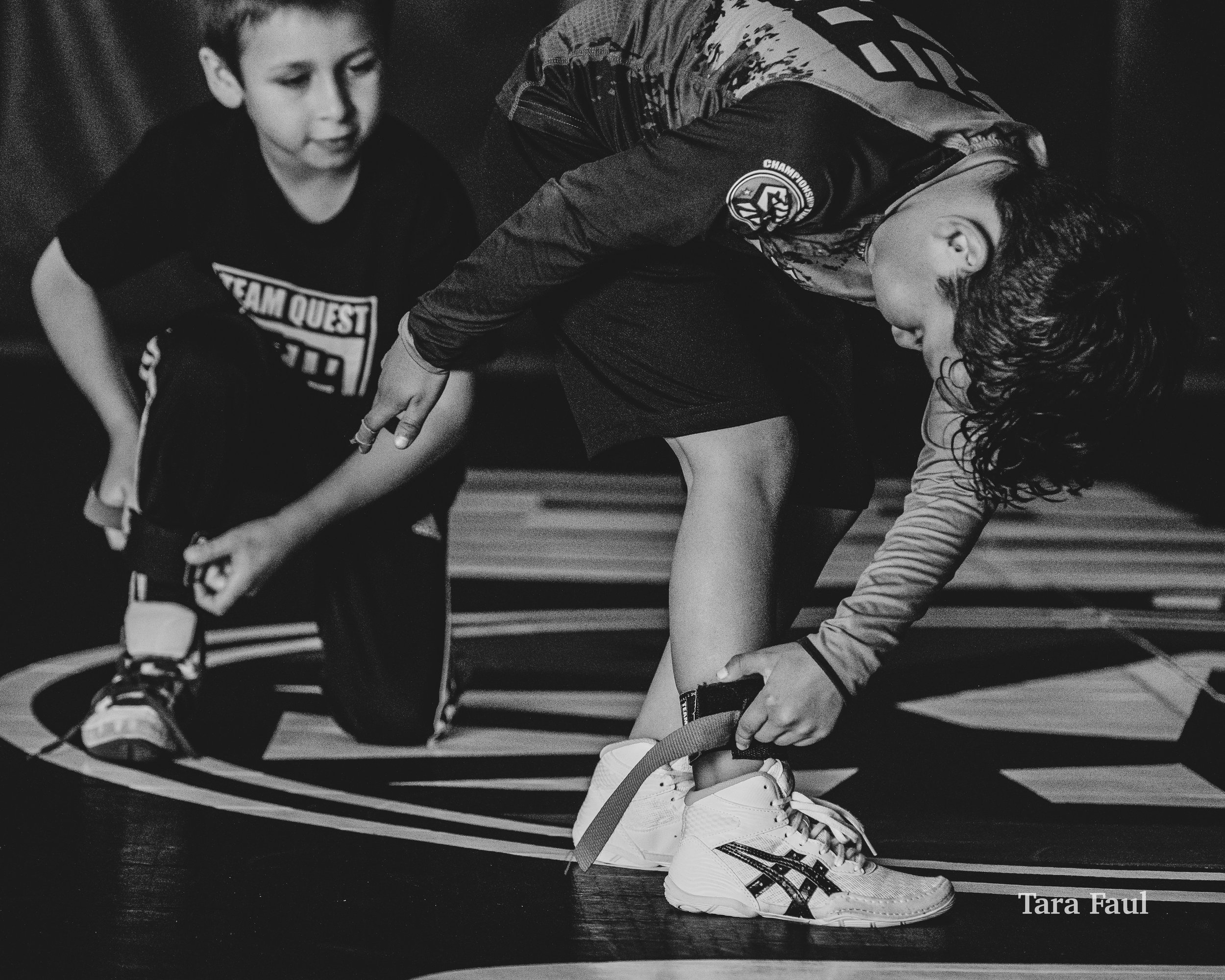
They are allowed to experience struggle and then discover that they can handle it.
Over time, something begins to change.
A young person who once avoided a challenge starts to move toward it.
A young person who doubted themselves starts to take ownership.
A young person who felt overwhelmed begins to find stability.
Not because someone told them they were strong, but because they proved it to themselves.
A More Complete Solution
This is not an argument against mental health support. It is an argument for a more complete approach.
Awareness isn’t the enemy. How it’s done matters.
If awareness is not paired with development, it can unintentionally contribute to the very fragility it is trying to prevent. But when awareness is paired with structure, responsibility, and challenge, it can become part of a much more effective system. One that doesn’t just identify problems but builds stronger kids who become strong and responsible adults capable of working through problems.
The Way Forward
If we want different outcomes, we must be honest about what is missing.
We cannot solve this problem by continuing to do more of the same: identify, therapy, medicate.
We need to invest not only in identifying mental health problems and providing support, but also in human development. Not only in understanding, but in building capability. Not only in intervention, but in preparation.
Because in the end, young people don’t just need to be heard and validated. They need to become the kind of people who can handle life and the struggles that come with it.
That doesn’t happen through awareness alone. It happens through challenge, responsibility, and growth over time.
Bottom Line
We don’t need less care, and we don’t need less support, but we do need development.
The goal is not just to help kids feel better in the moment. The goal is to help them become stronger for the long run.
That is a different kind of work, but it is the work that changes everything.